


Traveller Stories
Asmat, 1990: Along the Rivers
Warwick Barnes · 2 November 2026
Days in a dugout canoe, encounters in riverside villages, and the people who made the journey possible.
Part 2 of 3 · Papua, 1990: A Journey Remembered
By Warwick Barnes
At least twice each day, Tinus patched our leaking dugout canoe with mud. Captain Teo wore a black jacket and trousers, topped with a yellow safety helmet. Our guide in Asmat was Ricardo T. Ngamelubun, whom we knew as Thony.
All three were as tough as Thony’s boots.
When I remember our journey through Asmat in 1990, these men come quickly to mind. The swamp fascinated me, but the people were as memorable as the places and events.
At the Village Gates
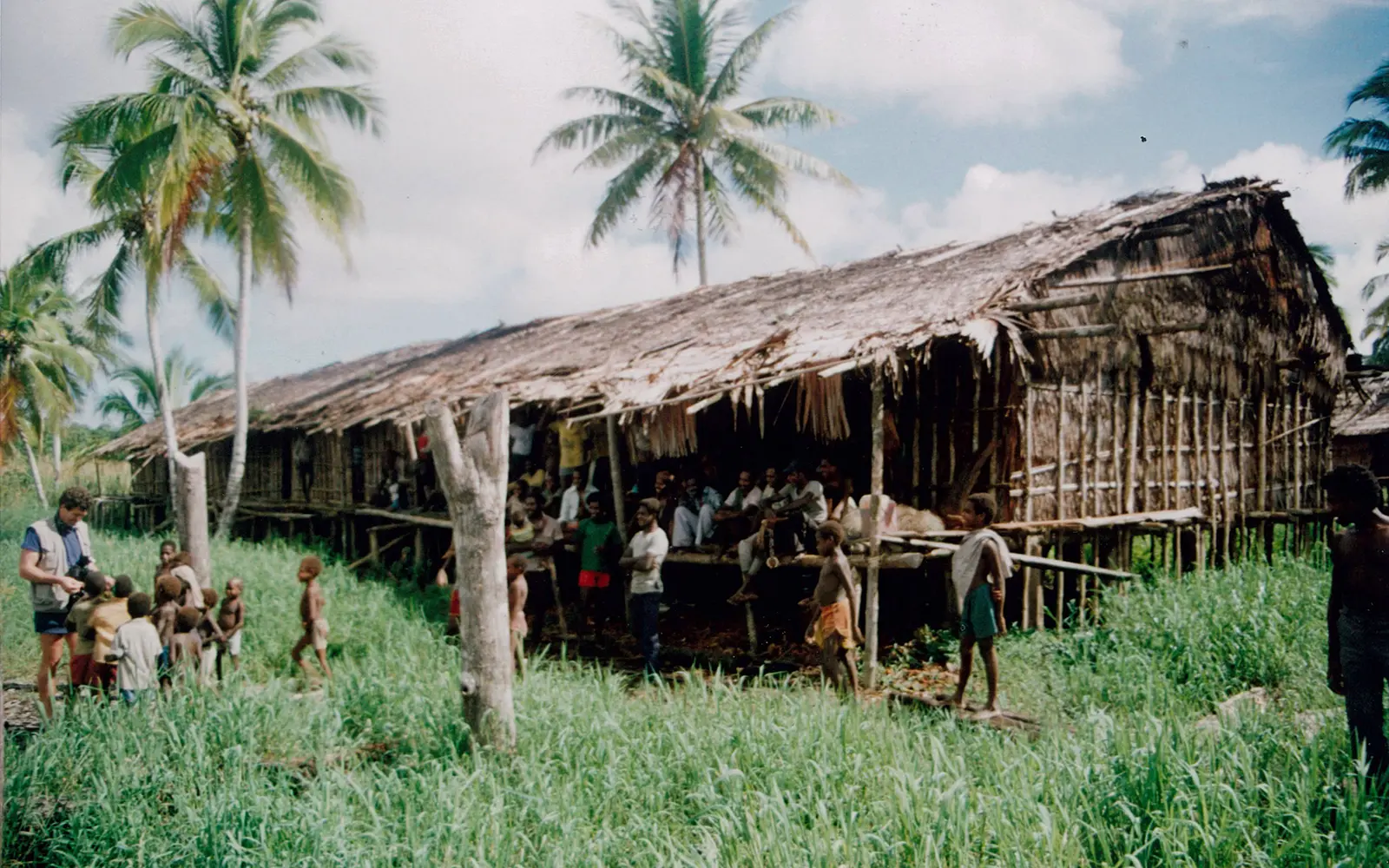
In one village, Irham and Thony negotiated with the elders for permission to enter and witness the preparations for their leader’s funeral. His death had been acknowledged on the day of our arrival.
My own impatience placed me in the wrong position at precisely the wrong moment. I stood in front of the gates, looking directly at the man entrusted with releasing the deceased leader’s spirit.
The action required all sound to cease, both within the village enclosure and close to it. There I was, an outsider at the gates, poorly placed to appreciate what the moment required.
It remains one of the incidents I recall most clearly: Irham and Thony carefully negotiating our presence, and my own badly timed appearance.
Days on the River
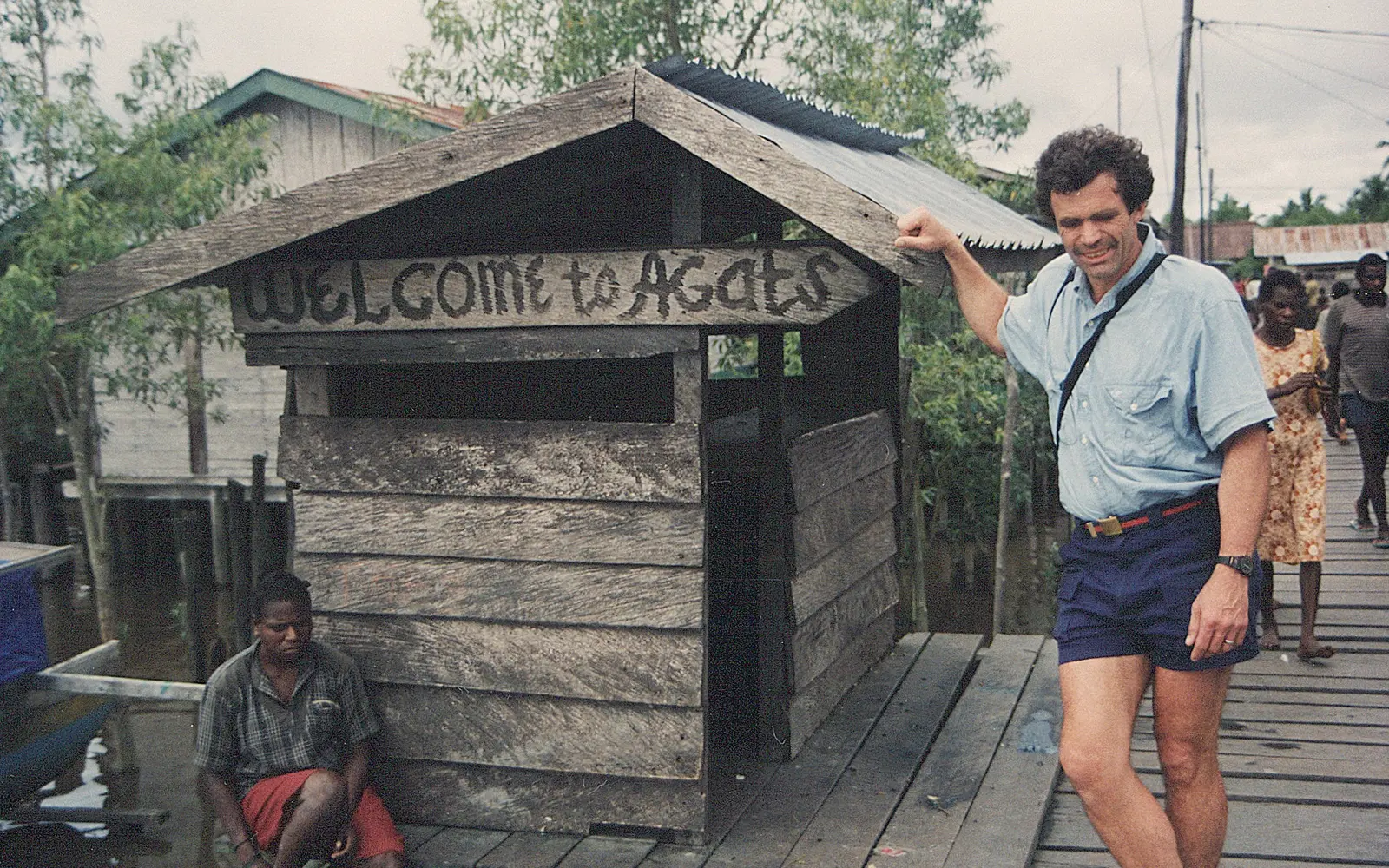
The following day, Irham negotiated with the chief of police in Agats for access to the river system. That conversation made possible an extraordinary meeting with two families who shared a tree house and lived by subsistence agriculture.
Other memories of the trip include a night in a schoolhouse and showers at the end of the day in pouring rain. I remember my reluctance to photograph crocodile skins drying behind a schoolteacher’s house, where he was supplementing his income.
At a wedding we attended as uninvited guests, the choir brought to mind the voices of a Melanesian Pacific island. On another occasion, I found a rifle cartridge from the Second World War in the white sand of G Beach. These memories sit beside one another, small details from a journey that rarely followed a predictable pattern.
There were unexpected connections, too. Irham and the chief of police both came from the Mandar community. The residents of our one-night homestay in Senggo also came from Sulawesi.
After our upriver trip, Ali, one of the policemen, insisted that we meet his family. He presented each of us with a carved spear. Later, his help would become part of another story involving the artefacts we had collected.
Finding a Way Onward
Flights provided their own memorable exchanges. When the Cessna arrived in Ewer, Sister Consilia’s first words were, “My God, where did you men come from?”
I also remember the Swiss pilot laughing when he saw five passengers for the flight from Ewer to Wamena. “One of you is not going,” he said.
In another instance, the Catholic Fathers shared their scheduled flight from Ewer to Jayapura with us, saving us at least two more days in Agats. In a journey where internal travel demanded patience, that help mattered a great deal.
My memories of Asmat are full of such people: Thony, Teo and Tinus keeping us moving on the river; Ali introducing us to his family; and those who helped us find a way onward by air. Their faces and words remain among the indelible memories of a trip of a lifetime.
Next in the series: The Mystery Box: A Journey Beyond Asmat.