


Culture
Baliem Valley Cultural Festival: A Journey into Papua’s Living Highland Cultures
Pacébo · 15 September 2026
Deep in the mountains of Papua, the Baliem Valley Cultural Festival brings together ancestral traditions, extraordinary performances, and the remarkable communities of Indonesia’s eastern highlands.
High above the tropical coastlines of Indonesia, beyond vast forests and towering mountain ranges, lies a valley where culture, landscape, and ancestral memory remain profoundly connected.
Here, in the heart of Papua’s highlands, morning mist drifts across cultivated valleys, traditional honai houses stand among gardens, and generations of inherited knowledge continue to shape the lives of local communities.
Each year, this extraordinary landscape becomes the setting for one of Indonesia’s most distinctive cultural celebrations: the Baliem Valley Cultural Festival, known locally as Festival Budaya Lembah Baliem.
For several remarkable days, communities from across the highlands gather to celebrate their cultural heritage through traditional dances, ceremonial dress, music, communal traditions, and performances inspired by the region’s history.
The sight can be unforgettable.
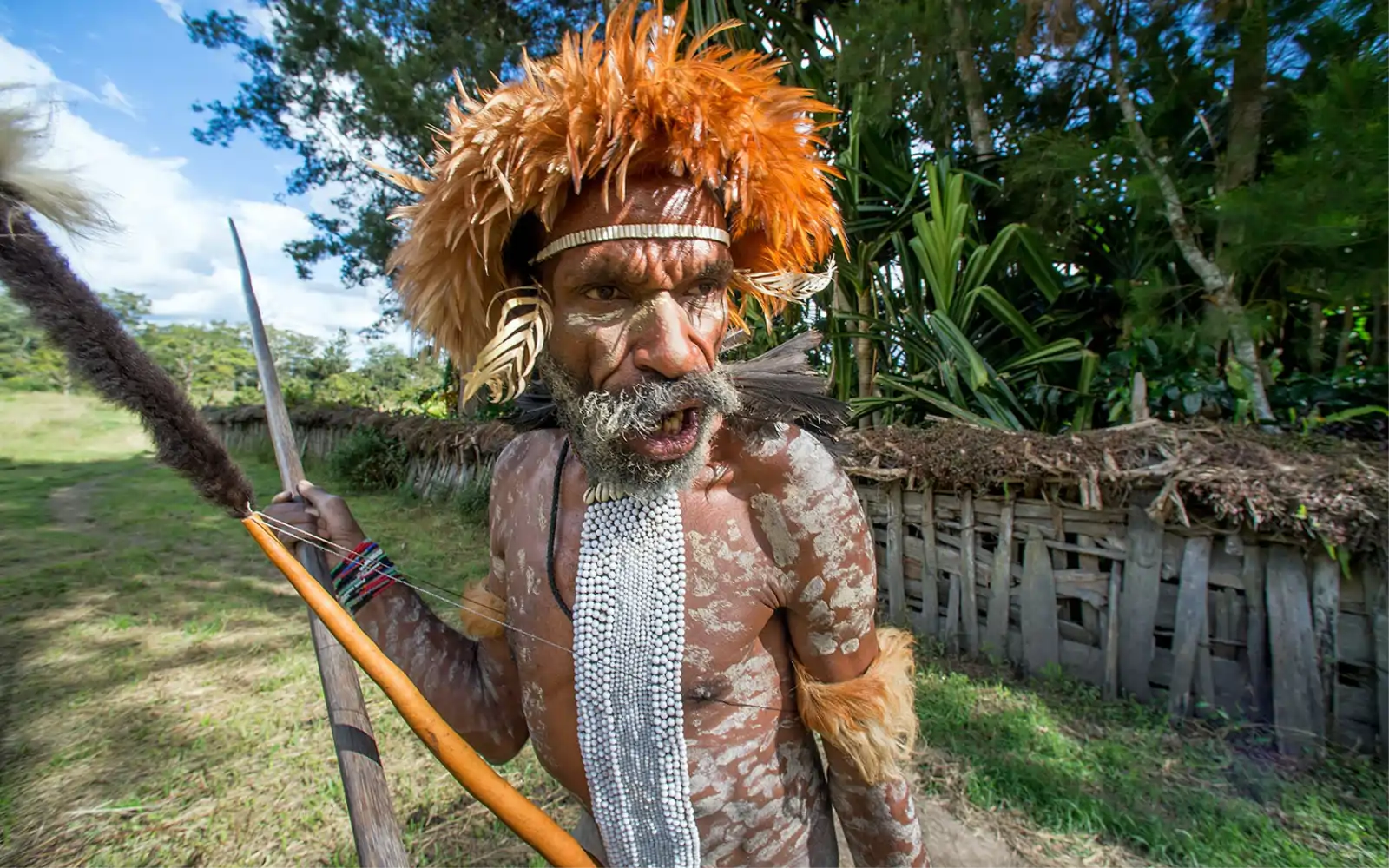
Groups of performers move across open fields beneath imposing mountain ridges. Elaborate feathered headdresses, traditional ornaments, body decorations, spears, and bows create a powerful expression of identity. Songs and rhythmic movements fill the air, while families, local communities, and visitors come together in celebration.
Yet the true significance of the Baliem Valley Festival extends far beyond its striking visual spectacle.
It is an expression of belonging, cultural continuity, and the enduring relationship between the people of Papua and their ancestral homeland.
To experience the festival is to witness a celebration. To understand the valley is to discover the living culture behind it.
The Baliem Valley: A World Among the Mountains
Situated in Jayawijaya Regency, Papua Pegunungan, or Highland Papua, the Baliem Valley occupies one of Indonesia’s most remarkable mountain landscapes.
At approximately 1,600 metres above sea level, the valley feels distinctly different from the tropical environments usually associated with the Indonesian archipelago.
Cool mountain air replaces the coastal heat. Steep green ridges rise above extensive agricultural land, while the Baliem River winds through a landscape cultivated and inhabited for generations.
Wamena, the principal town of the region, serves as the gateway to the valley and its surrounding highland communities.
Beyond the town, roads lead towards traditional settlements, fertile gardens, mountain trails, and villages where daily life remains closely connected to the rhythms of the land.
Sweet potatoes, an important staple food across Papua’s highlands, are cultivated in carefully maintained gardens. Traditional honai houses, with their rounded forms and distinctive thatched roofs, remain part of the region’s architectural heritage.
People move between villages, fields, and markets, carrying agricultural produce, personal belongings, and the characteristic woven or knotted bags known as noken.
This is not an untouched wilderness separated from human history.
It is a living cultural landscape, shaped by settlement, agriculture, movement, and the knowledge of generations.
Understanding this relationship between people and place is essential to appreciating the cultural celebration that takes place here.
A Festival Rooted in the Cultural Heritage of Papua
The Baliem Valley Cultural Festival brings together expressions of the diverse cultural traditions found throughout Papua’s central highlands.
The region is associated with communities including the Hubula, often known more widely as Dani, as well as the Lani, Yali, and other highland peoples whose histories, languages, identities, and customs are distinct.
The festival provides a shared space in which participating communities can present aspects of their heritage through dance, music, traditional dress, communal activities, and cultural performances.
Some of its most recognisable presentations draw inspiration from historical warfare traditions. Others celebrate agricultural life, craftsmanship, traditional games, food, or contemporary expressions of Papuan identity.
But the festival should not be understood as a collection of customs preserved unchanged from the distant past.
The people of Papua’s highlands live in the contemporary world, participating in modern education, commerce, religious life, technology, and wider Indonesian society.
Their cultural traditions continue to evolve alongside these changes.
This is precisely what makes the Baliem Valley Festival so meaningful.
It is not simply an attempt to recreate the past.
It is an opportunity for communities to celebrate the traditions they have inherited while expressing their place in the present.
When Is the Baliem Valley Cultural Festival Held?
The Baliem Valley Cultural Festival is generally organised in August, although its exact dates, location, and programme can change from year to year.
The 34th edition in 2026 took place as part of a wider cultural programme from 7 to 10 August. The principal festival performances were held on 7–8 August in Walesi District, while additional events in Wamena, including activities celebrating Papuan coffee and noken craftsmanship, continued through 10 August.
For travellers planning a future visit, it is important to confirm the official schedule before making final arrangements.
Festival dates should never be assumed to remain identical each year, and programme details may be adjusted by the local organisers.
Because flights to Wamena and suitable accommodation can be limited during the festival period, advance planning is highly recommended.
Ideally, travellers should allow several days in the valley rather than arranging a brief visit solely around the main performances.
This provides time to discover the communities, landscapes, and everyday traditions that give the celebration its deeper meaning.
Traditional War Performances: History Expressed Through Movement
Among the festival’s most recognisable events are the traditional mock battles, often described as tribal war performances.
Across an open field, groups of performers gather with spears, bows, arrows, and traditional ornaments. Movements become coordinated, voices rise, and participants advance in formations that evoke aspects of the highlands’ historical warfare traditions.
Against the backdrop of Papua’s green mountains, these performances create some of the festival’s most dramatic images.
Yet their significance cannot be understood through appearance alone.
Historically, warfare in different parts of Papua’s highlands was connected to complex relationships involving territory, social obligations, disputes, alliances, and community identity.
The performances presented during the festival transform elements of that history into organised cultural expression.
They are staged representations, not actual armed conflicts.
Traditional weapons, forms of dress, body decoration, movement, and group participation reflect aspects of a much broader cultural heritage.
For visitors, understanding this distinction adds an important dimension to the experience.
The purpose is not simply to witness an impressive display.
It is to recognise how communities choose to remember, present, and share elements of their history.
Traditional Dance, Music, and the Expression of Identity
Dance and music are essential to the atmosphere of the Baliem Valley Festival.
Participating groups may arrive wearing traditional highland attire, decorated with feathers, woven ornaments, distinctive body markings, and other culturally significant accessories.
Songs, rhythmic movements, and coordinated performances bring together individuals and communities in a celebration of shared heritage.
The styles and meanings of these presentations can vary according to the participating groups.
Some performances reflect historical traditions, while others express communal pride, celebration, or contemporary creativity.
The visual beauty of these gatherings is undeniable.
But beyond the movement and colour lies something more significant: the opportunity for cultural knowledge to be communicated, recognised, and celebrated.
For younger generations, participation may also provide a meaningful connection to traditions associated with their families and communities.
For visitors, the experience offers a window into the diversity of Papua’s highland cultures.
Not as a single, uniform identity, but as a collection of living traditions shaped by different histories and relationships.
Bakar Batu: The Tradition of Gathering Around Food
One of the most meaningful communal practices associated with Papua’s highlands is Bakar Batu, a traditional method of cooking with heated stones.
The process typically involves heating stones over a fire before using them to cook food arranged in layers, often including meat, vegetables, and locally grown produce.
At first glance, Bakar Batu may appear to be an unusual cooking technique.
But its cultural importance extends much further.
Across various highland communities, forms of communal stone cooking are associated with celebrations, gatherings, hospitality, reconciliation, and important social occasions.
Preparing and sharing food creates opportunities for participation and strengthens relationships within a community.
The act of gathering is often as significant as the meal itself.
When Bakar Batu is presented during a festival, visitors have the opportunity to observe not only a culinary tradition but also an expression of collective life.
It is a reminder that some of the most meaningful aspects of a culture are found in ordinary human experiences.
Preparing food. Sharing a meal. Welcoming others. And coming together as a community.
Noken: A Living Symbol of Papuan Heritage
Among the most recognisable cultural objects of Papua is the noken, a traditional bag made through intricate weaving or knotting techniques.
Created from materials such as plant fibres, noken bags have long served practical purposes, including carrying agricultural produce, firewood, personal belongings, and other everyday necessities.
Yet their importance extends beyond their function.
Noken craftsmanship represents inherited knowledge, skilled handwork, and connections between generations.
The techniques used to create these bags vary among communities and are traditionally passed from experienced makers to younger learners.
In 2012, UNESCO inscribed the noken tradition on its List of Intangible Cultural Heritage in Need of Urgent Safeguarding, recognising both its cultural significance and the importance of protecting its transmission to future generations.
Today, noken remains an important expression of Papuan identity.
It can be found in everyday life, traditional celebrations, local markets, and contemporary creative work.
The inclusion of noken-related activities in the Baliem Valley Festival reflects this continuing relationship between heritage and modern expression.
Culture does not remain meaningful because it is frozen in time.
It remains meaningful because people continue to practise, adapt, and pass it on.
Beyond the Festival: Discovering Everyday Life in the Baliem Valley
The festival may be the reason many travellers first hear about Wamena.
But some of the most rewarding experiences begin after leaving the festival grounds.
Away from the performances and crowds, the valley reveals a quieter rhythm.
Small settlements appear beside cultivated fields. Traditional houses stand among gardens. Narrow paths connect communities, while mountain ridges rise above the green landscape.
Here, daily life unfolds according to its own priorities.
People tend their gardens, visit markets, travel between settlements, and maintain the family and community relationships that shape their lives.
For travellers interested in meaningful cultural encounters, these everyday moments can be just as memorable as the main festival.
A conversation about agricultural life, an introduction to traditional architecture, or an explanation of how noken is made can reveal aspects of Papuan culture that no staged performance could fully communicate.
Such experiences require patience and respect.
Villages are places where people live, not attractions created for visitors.
A thoughtful journey allows time for introductions, conversation, and encounters arranged with the agreement of local hosts.
For those wishing to explore this cultural landscape more deeply, Pacébo offers a private Baliem Valley journey through Dani culture and Papua’s highland landscapes, combining guided village experiences, scenic walks, and meaningful encounters with the region’s living heritage.
The most rewarding cultural travel does not simply bring us closer to extraordinary sights.
It allows us to understand the people and circumstances behind them.
Walking Through Papua’s Highland Landscapes
The Baliem Valley is particularly rewarding for travellers who enjoy exploring on foot.
Walking routes connect agricultural land, villages, river crossings, and mountain scenery, offering different perspectives on the relationship between local communities and their environment.
Depending on the chosen itinerary, walks may range from gentle village visits to more demanding treks into the surrounding highlands.
The experience can be remarkably varied.
A morning walk might follow a path beside cultivated gardens before crossing a river and continuing towards a traditional settlement.
Elsewhere, routes pass through rolling hills, open valleys, and landscapes where the mountains seem to extend endlessly into the distance.
Walking allows travellers to appreciate details that are easily missed when travelling by vehicle.
The cultivation of sweet potatoes.
The structure of traditional houses.
The movement of people between neighbouring communities.
The changing mountain light.
The remarkable knowledge required to live and farm in this environment.
These experiences reveal that the Baliem Valley is not simply a beautiful natural destination.
It is a landscape inseparable from the people who have shaped it.
Photographing the Festival with Cultural Sensitivity
For photographers, the Baliem Valley Festival offers exceptional opportunities.
The combination of dramatic mountain scenery, traditional ornaments, expressive movement, colourful gatherings, and cultural performances creates a visually powerful setting.
However, meaningful photography begins with respect.
Festival participants are people sharing aspects of their cultural heritage, not subjects arranged solely for the cameras of visitors.
Permission should be requested for close portraits when appropriate, and photographers should avoid interrupting performances or entering private spaces without invitation.
The same principle becomes even more important during village visits.
Traditional clothing does not automatically imply consent to be photographed, and private family activities should be respected.
An experienced local guide can help travellers understand appropriate etiquette and communicate with community members.
Often, the most compelling images are not necessarily those filled with the greatest movement or drama.
An artisan working carefully on a noken.
A quiet conversation between generations.
The smoke rising from a communal cooking area.
A family returning from its gardens.
The changing light over the highland landscape.
Such moments can reveal a more intimate understanding of Papua than images concerned only with spectacle.
The most meaningful photographs are often those that preserve a connection, rather than simply capture an appearance.
How to Reach the Baliem Valley
Wamena is the principal gateway for travellers visiting the Baliem Valley.
Because there are no direct international flights into the valley, visitors generally travel through major Indonesian airports before connecting to Papua.
A common domestic approach is through Jayapura, followed by a flight to Wamena. Exact flight routes and schedules should be checked when planning the journey.
Travelling in Papua requires more careful logistical preparation than visiting many of Indonesia’s established tourism destinations.
Domestic flight availability, weather conditions, accommodation, local transport, and travel arrangements may all influence the itinerary.
Depending on the areas being visited, additional local permissions or administrative arrangements may also need to be considered.
For this reason, coordination with an experienced local travel operator can be particularly valuable.
A carefully arranged journey allows visitors to focus on the cultural experience while essential transportation, accommodation, guiding, and logistical details are coordinated in advance.
Weather and What to Pack for the Baliem Valley Festival
Despite its tropical location, the Baliem Valley experiences a noticeably cooler climate than Indonesia’s coastal regions.
Its elevation creates pleasant daytime conditions when the sun is shining, while early mornings and evenings can feel considerably cooler.
Rain is possible, and mountain weather may change quickly.
Travellers attending the festival should therefore prepare for a mixture of sunshine, cool air, and occasional wet conditions.
Comfortable walking shoes with reliable grip are particularly useful, especially when exploring villages or travelling across uneven ground.
A lightweight waterproof jacket, additional layers for cooler periods, sun protection, personal medication, a daypack, and spare camera batteries or a power bank are also practical additions.
Cash can be useful for small purchases in areas where electronic payment facilities may be limited.
Above all, travellers should arrive with realistic expectations and a willingness to remain flexible.
Remote highland travel does not always follow the predictable rhythm of major tourism centres.
Flights, roads, weather, and local programmes can change.
Good planning makes the journey smoother, while adaptability allows travellers to appreciate the experience as it unfolds.
How Many Days Should You Spend in the Baliem Valley?
Although the festival itself may take place over only a few days, a meaningful visit to the Baliem Valley deserves more time.
For many travellers, a journey of approximately five to seven days can provide a comfortable introduction to the region, depending on the festival programme, available flights, and personal interests.
This allows time not only for the cultural performances but also for the landscapes and communities surrounding Wamena.
A thoughtfully designed itinerary might combine festival attendance with visits to traditional villages, local markets, gentle walks through cultivated valleys, and encounters focused on everyday highland life.
Travellers with a strong interest in photography may prefer additional time at the festival, while those drawn to cultural exploration may wish to visit more villages and spend longer learning about local traditions.
More adventurous visitors may choose to extend their journey into the surrounding mountains, where walking routes become progressively more demanding.
There is no single ideal way to explore the Baliem Valley.
The essential consideration is to create enough time for the experience to develop naturally, without reducing the region to a hurried collection of photographs and sightseeing stops.
Responsible Travel in Papua: Beyond the Idea of an Untouched World
For decades, Papua has captured the imagination of travellers, photographers, writers, and cultural researchers.
Its extraordinary landscapes and cultural diversity have often been described through ideas of remoteness, isolation, and traditions belonging to another age.
Yet such descriptions can overlook an important reality.
Papua is not a world suspended outside modern history.
Its communities are living societies, with contemporary aspirations, evolving identities, and their own perspectives on cultural change.
Traditional knowledge can exist alongside modern education.
Ancestral customs can remain significant in families whose members live and work in cities.
Traditional dress may be worn during cultural celebrations while everyday clothing reflects contemporary preferences.
None of these changes makes the culture less meaningful or less authentic.
Responsible travel begins by recognising that communities are not required to resemble the images travellers may have seen in books or documentaries.
Their heritage belongs to them, and they decide how it is practised, adapted, and shared.
The Baliem Valley Festival provides a valuable opportunity to encounter aspects of this heritage.
But the most respectful visitors understand that the people taking part in the celebration are not simply representatives of the past.
They are individuals and communities living in the present.
Discovering the Baliem Valley with Pacébo
At Pacébo, we believe that the most memorable journeys are shaped by a combination of cultural understanding, thoughtful preparation, and genuine human encounters.
The Baliem Valley Cultural Festival is an extraordinary occasion, but we believe its deepest value emerges when it becomes part of a wider exploration of Papua’s highlands.
Our approach is to create journeys that balance the excitement of the festival with time to discover the communities, landscapes, and traditions that give it meaning.
Through carefully planned private and small-group experiences, we help travellers explore the Baliem Valley with knowledgeable local guides, coordinated transportation, thoughtfully selected accommodation, and the logistical support needed for travel in this remarkable region.
Whether the focus is cultural photography, traditional villages, mountain scenery, or a broader expedition through Papua, each journey can be designed around the traveller’s interests, available time, and preferred pace.
We also recognise the importance of respectful cultural encounters.
Our aim is not to turn local traditions into performances for travellers, but to help guests appreciate the cultural expressions that communities choose to share.
In a region where arrangements require flexibility, experienced local coordination is an essential part of a well-designed journey.
We seek to provide comfort and personal attention while remaining realistic about the character of travel in Papua’s highlands, where accommodation, infrastructure, and transport differ considerably from those of Indonesia’s established luxury destinations.
For us, an exceptional journey is not defined by luxury alone. It is defined by the depth of the experience, the quality of its organisation, and the understanding travellers take home.
For a focused introduction to the valley, explore our Baliem Valley — Dani Culture & Highland Worlds, a private cultural journey through traditional communities and remarkable highland scenery.
For travellers seeking a more ambitious exploration of Indonesia’s easternmost landscapes, our Epic Papua — Highlands, Ancestors & Living Frontiers expedition connects the Baliem Valley with the forest communities of Korowai and the remarkable river cultures of Asmat.
Festival-focused programmes can also be developed around the official event schedule, allowing travellers to combine the celebrations with a carefully planned exploration of the surrounding highlands.
Each journey is designed with attention to cultural authenticity, personal comfort, and the practical realities of travelling through Papua.
If you are considering a journey to the Baliem Valley Cultural Festival, contact Pacébo to create your private Papua journey, thoughtfully tailored to your interests, travel dates, and preferred style of exploration.
The Festival Ends, but the Valley Remains
The Baliem Valley Cultural Festival is an unforgettable celebration.
The movement of traditional dancers, the sound of communal singing, the dramatic performances, and the sight of Papuan highland communities gathering against a backdrop of green mountains create memories that are difficult to forget.
But when the festival ends, another experience remains.
The valley returns to its everyday rhythm.
Families continue tending their gardens. Markets welcome the morning. Paths lead between settlements. Rivers flow through the mountains, and the landscape carries on with the lives of the people who call it home.
This is perhaps the most important thing to understand about the Baliem Valley.
Its cultural richness does not begin when the festival opens, nor does it disappear when the celebrations come to an end.
It lives in the knowledge of its communities, in the traditions passed between generations, and in the relationships between people and the land.
The festival offers a remarkable introduction to this world.
But the deeper journey begins when we look beyond the performances, listen to the stories, and allow ourselves to experience the highlands at their own pace.
Come for the festival. Stay for the people, the landscapes, and the living heritage of Papua.
Discover the Baliem Valley with Pacébo — where thoughtful travel opens the door to a deeper understanding of Indonesia’s extraordinary highland cultures.