


Field Notes
Field Notes from Korowai: Life Above the Forest Floor
Pacébo · 15 August 2026
Deep in the rainforests of southern Papua, the Korowai have developed an extraordinary relationship with the forest — one expressed through elevated houses, sago traditions, hunting knowledge, and ways of life shaped by generations of adaptation. Beyond the familiar images of tree houses lies a much deeper story of people, place, and cultural continuity.
There are places that remain in our imagination long before we ever reach them.
For many travellers, Korowai is one of those places.
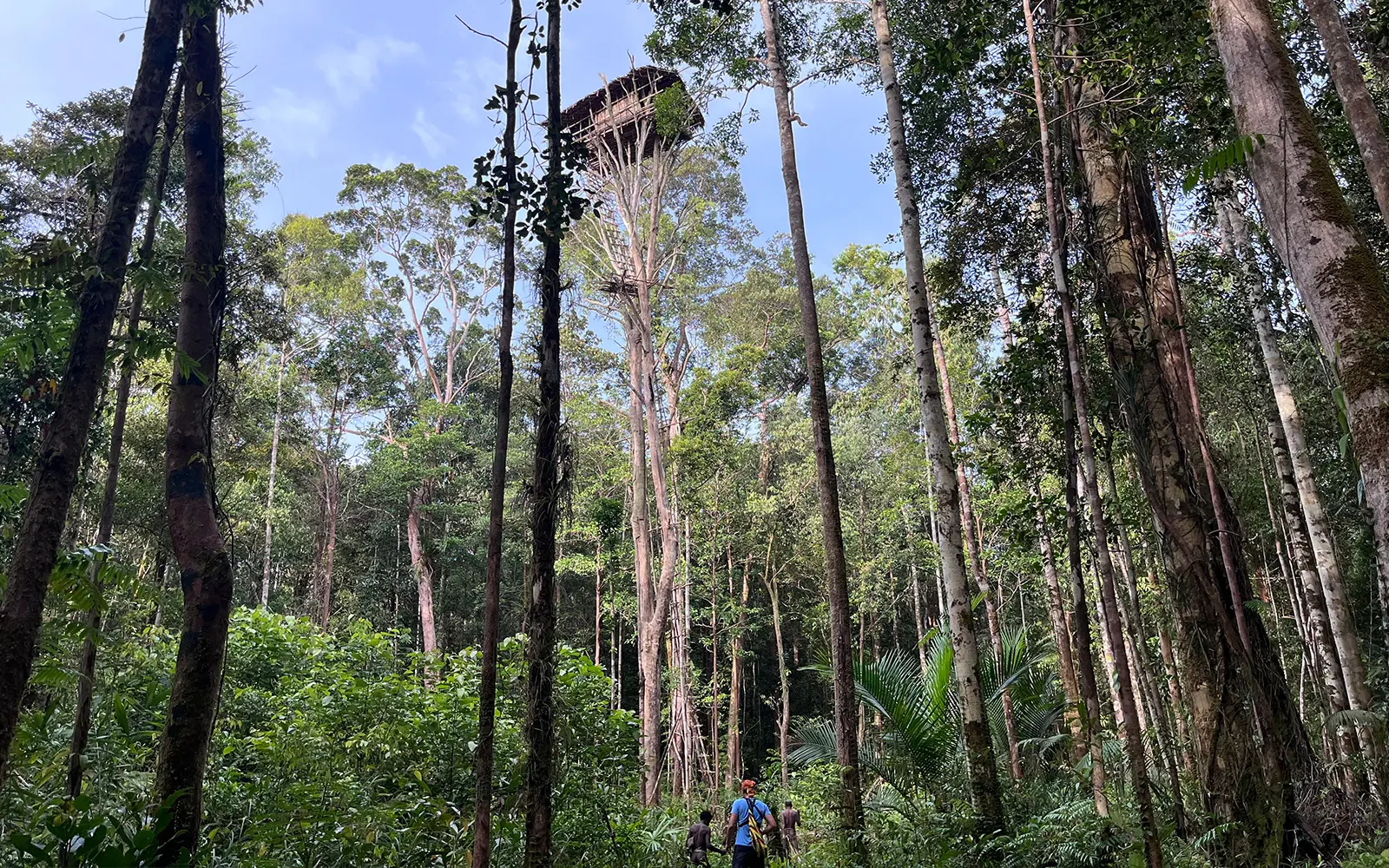
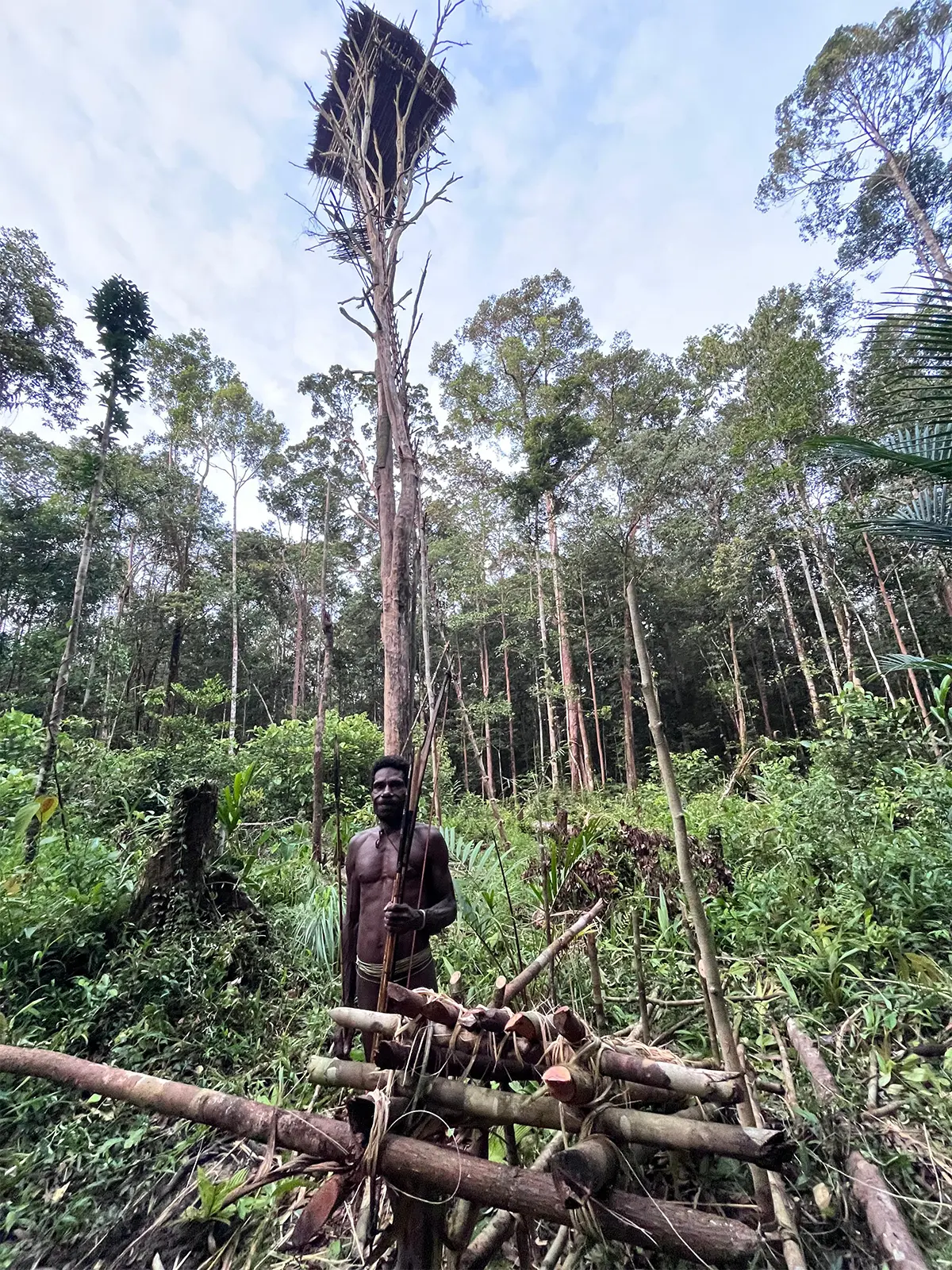
Deep within the rainforest of southern Papua, far from Indonesia's familiar island landscapes, the Korowai are known around the world for their remarkable tree houses — structures built from materials gathered in the surrounding forest, sometimes rising high above the ground.
The images are extraordinary. Wooden houses appear suspended among the trees, connected to the earth by narrow ladders, surrounded by dense tropical vegetation.
For decades, photographs and documentaries have presented these houses as symbols of one of Indonesia's most remote cultural worlds.
Yet the reality of Korowai life is far richer than any photograph can suggest.
The forest is not simply a backdrop to an unusual architectural tradition. It is a source of food, shelter, materials, knowledge, movement, and memory.
And the people who live within it are not figures from a distant past.
They are members of living communities, navigating the relationship between inherited traditions and a world that continues to change.
Our journey into Korowai territory began with an image of houses above the forest floor.
What remained with us, however, was something much more profound.
We arrived looking upward at the tree houses. We left with a deeper appreciation of the world beneath them.
The Journey Begins Long Before the Tree Houses
Reaching Korowai territory is an experience in itself.
Unlike destinations connected by comfortable highways and established tourist infrastructure, the interior of southern Papua demands careful preparation, patience, and an understanding of the landscape.
The journey unfolds gradually.
Flights connect distant towns. Boats follow winding waterways. Rivers narrow into smaller channels, and eventually the final stages of travel continue on foot along forest trails.
From the water, the rainforest appears almost endless.
Dense vegetation stretches along the riverbanks. Trees lean over the muddy water, while reflections disappear beneath the movement of the current.
Occasionally, a canoe passes in the opposite direction. A small settlement emerges between the trees before vanishing again behind the forest.
The landscape seems quiet, but it is never truly still.
The river carries the rhythm of daily life.
People travel along these waterways to visit family members, exchange goods, reach neighbouring communities, and connect with the wider region.
For visitors, a journey that appears relatively straightforward on a map can become a long and demanding expedition.
River levels change. Rain affects the trails. Mud slows progress, and distances that appear short may require hours of travel.
The forest does not adjust itself to an itinerary.
Travellers must learn to adapt to the forest.
Eventually, the engine falls silent.
The boats are left behind, and the journey continues on foot.
Beneath the canopy, the atmosphere changes.
Humidity settles on the skin. Roots cross the trail. Soft ground requires careful steps, and the sounds of the forest seem to come from every direction.
Birds call somewhere above. Insects move through the vegetation. Leaves rustle beyond sight.
To an unfamiliar traveller, the forest can appear almost impossible to navigate.
Yet for those who know it, the landscape is filled with information.
And this is where the deeper story of Korowai begins.
The Korowai Tree House: Architecture Shaped by the Forest
Few traditional forms of architecture have attracted as much international curiosity as the Korowai tree house.
Built using timber, bark, rattan, palm materials, and other resources from the surrounding environment, these elevated houses reflect generations of architectural and ecological knowledge.
Some stand only a modest distance above the ground, while others can be considerably higher. Their design, height, and use vary according to location, purpose, and family circumstances.
But reducing their significance to a question of height misses the most important part of the story.
A Korowai tree house represents an understanding of the forest and the materials it provides.
A suitable tree must be selected. Structural supports must be prepared. Timber needs to be cut and positioned carefully, while rattan and other binding materials hold different elements together.
Palm bark and leaves may be used for flooring, walls, and roofing.
A notched wooden trunk can become a ladder, connecting the living space with the ground below.
Every stage requires experience.
Someone must understand which materials are suitable, how much weight a structure can support, how it will respond to rain and humidity, and when repairs or rebuilding may be necessary.
This is architecture developed through close observation of the environment.
Elevated houses can provide practical advantages in wet forest conditions, while their placement may also reflect privacy, family preferences, and other local considerations.
There is no single explanation that applies to every Korowai house.
What matters is the knowledge behind its construction.
For travellers, the first encounter with a tree house can be unforgettable.
Standing beneath it, the instinct is naturally to look upward.
But as the initial sense of wonder begins to settle, other details emerge.
A fire burning nearby. Tools resting against timber. Materials prepared for daily work. A garden beyond the clearing. A path disappearing into the surrounding trees.
The structure slowly stops being an extraordinary image.
It becomes part of a home.
And a home can never be understood through architecture alone.
It is also the family, the food, the surrounding land, the routes to the river, the memories of those who lived there, and the knowledge required to sustain daily life.
The tree house is remarkable not simply because it stands above the ground, but because it belongs to an entire way of understanding the forest.
The Forest Is Not Wilderness. It Is Knowledge.
To an outsider, the rainforest can seem like an endless expanse of green.
The vegetation appears dense and repetitive. Trails are difficult to distinguish, and familiar landmarks are often absent.
For the Korowai people who know the landscape, however, the forest contains countless differences.
A particular tree may indicate useful building material.
A group of sago palms may represent an important food resource.
A disturbed patch of ground may reveal the recent movement of an animal.
The direction of a trail, the condition of the riverbank, the sound of a bird, or the appearance of the soil can all provide information.
Living within this environment requires a knowledge that cannot be learned simply by reading a map.
It is acquired through experience, observation, and the transmission of practical skills across generations.
During forest walks, the difference between a visitor and an experienced local guide becomes immediately apparent.
Where we might see only vegetation, someone familiar with the terrain recognises a path.
Where we notice a broken branch, they may understand that an animal has passed through.
Where we struggle to orient ourselves, they know which direction leads towards a garden, a river, or another settlement.
This knowledge is not merely a collection of survival techniques.
It is part of a relationship with the environment.
The forest is understood through use, memory, and familiarity.
A landscape that seems mysterious to visitors may be entirely legible to those who have spent their lives moving through it.
And perhaps this is one of the most valuable lessons of travelling through Korowai territory.
The forest is not empty simply because we cannot understand it.
It is full of meaning that we have not yet learned to recognise.
Sago: The Foundation of Forest Life
Among the most important natural resources associated with Korowai life is the sago palm.
To visitors unfamiliar with the rainforest, it may appear to be simply another tree among countless others.
For communities that depend on sago, however, it represents food, materials, labour, and an essential part of daily knowledge.
The process of turning a sago palm into food requires considerable skill.
First, a suitable palm must be identified.
Local knowledge helps determine which tree is ready for processing, where it can be found, and how its use fits within the family's relationship with the surrounding forest.
Once the palm is felled, its trunk is opened to reach the starch-rich interior.
The pith is worked and broken down, then mixed and washed with water so that the starch can be separated and collected.
The resulting sago becomes an important source of nourishment.
What eventually appears as food begins with a remarkable amount of physical work.
There is cutting, splitting, pounding, washing, filtering, and preparation.
Each stage depends upon experience and an understanding of the materials.
Watching this process changes the way a traveller thinks about food.
In places where meals arrive from supermarkets, restaurants, or established supply chains, it is easy to forget the relationship between nourishment and the environment.
Here, that relationship remains immediately visible.
A meal of sago carries the history of the tree from which it came.
The tools used to process it.
The water required to extract it.
The hands that prepared it.
And the knowledge passed down by those who learned the same skills generations before.
Sago is not simply an ingredient.
It is part of the cultural and ecological foundation of life in the forest.
Sago Grubs: Understanding Food Beyond Familiar Boundaries
The sago palm also supports another traditional food associated with the forest: sago grubs.
As fallen or harvested palm trunks begin to decompose, certain beetles may lay their eggs within the softening material.
The larvae develop inside the trunk and can later be gathered as a source of food.
For many international visitors, the sight of these pale, thick-bodied larvae may be unexpected.
Our own field notes recall the hesitation of encountering them for the first time.
What seemed unfamiliar to us was entirely ordinary within the context of local food knowledge.
The grubs were gathered from the palm, handled with ease, and offered to us.
There was laughter, curiosity, and a moment of uncertainty before we finally tasted one.
The anticipation proved more memorable than the taste itself.
But the experience revealed something important.
Our understanding of food is shaped by the culture in which we grow up.
What feels familiar in one society may seem unusual in another.
For the communities who traditionally gather sago grubs, they are not an exotic curiosity created for adventurous visitors.
They belong to a broader relationship with the sago palm, food resources, and the forest environment.
The same palm can provide starch, construction materials, and conditions in which another source of nourishment develops.
Understanding this relationship requires looking beyond the immediate surprise of encountering an unfamiliar food.
The deeper story is about knowledge, adaptation, and the ways people make use of the resources available to them.
Cultural understanding begins when curiosity becomes a willingness to recognise meaning beyond our own habits.
Hunting, Cassowaries, and Reading the Forest
Hunting knowledge forms another important part of the Korowai relationship with the forest.
The southern Papuan rainforest supports a diverse range of wildlife, including birds, reptiles, and other animals.
Among its most recognisable inhabitants is the cassowary, a powerful, flightless bird native to New Guinea and surrounding regions.
For an experienced hunter, searching for an animal begins long before it becomes visible.
A footprint in soft ground.
Vegetation disturbed along a narrow trail.
A broken branch.
A faint sound beyond the trees.
Each may provide information about an animal's movements.
Our field notes describe following signs of cassowary activity while walking with people familiar with the forest.
There was no certainty that an animal would appear.
What mattered was the process of observation.
The ability to identify tracks, interpret the landscape, recognise animal behaviour, and decide where to continue.
These are skills built through experience and transmitted knowledge.
The same principle applies to the waterways.
Crocodiles are part of the river environments of southern Papua, and traditional knowledge concerning these animals forms part of a wider understanding of the opportunities and dangers associated with river life.
From a boat, a quiet stretch of water may appear peaceful.
But those familiar with the river understand that its surface reveals only part of the story.
They recognise changing currents, difficult banks, animal habitats, and places requiring particular caution.
For travellers, these encounters should not be approached as wildlife performances or hunting attractions.
Traditional hunting belongs to the historical and contemporary relationship between communities and their environment, and any activities must respect local regulations, wildlife conservation, and the choices of local hosts.
The most valuable experience is not necessarily seeing an animal.
It is gaining an appreciation of the knowledge required to understand where and how wildlife lives.
In the forest, patience is often more important than spectacle.
Everyday Life Beyond the Famous Tree Houses
For much of the outside world, the Korowai are known primarily through photographs of elevated houses.
Yet focusing only on these structures can create a misleading picture of contemporary life.
Korowai communities are not uniform, and their living arrangements, daily activities, and relationships with the wider world vary.
Some families maintain close connections with forest settlements, gardens, and traditional housing.
Others spend time in villages or settlements linked more directly to river transport, markets, schools, religious institutions, and administrative services.
Modern tools and clothing may exist alongside traditional forest knowledge.
Some community members work with visitors as local guides, boat operators, porters, hosts, or expedition assistants.
These changes do not make their cultural identity less meaningful.
They reflect decisions made by people living in a changing world.
A culture does not become authentic simply because it remains isolated from outside influences.
It remains meaningful because people continue to shape their own lives, preserve what matters to them, and adapt inherited knowledge to new circumstances.
Understanding this is particularly important when visiting places that have long been portrayed through images of remoteness.
The Korowai are not characters from another period of history.
They are people with families, responsibilities, preferences, aspirations, and choices.
Some traditions continue. Others change. Different generations may approach the future in different ways.
The presence of modern life should not disappoint travellers seeking a cultural encounter.
It should deepen their understanding.
The most meaningful journeys do not require people to remain unchanged.
They allow us to appreciate the complexity of how people live today.
When Photography Becomes a Responsibility
Korowai is an extraordinary destination for cultural and documentary photography.
The relationship between the rainforest and elevated houses creates striking compositions.
Natural light filters through dense foliage, smoke rises from cooking areas, and daily activities unfold among materials gathered from the surrounding environment.
Yet the visual power of the setting brings an important responsibility.
A photograph can capture a tree house without explaining the life surrounding it.
It can record a hunter holding a traditional tool without communicating the knowledge behind its use.
It can portray a family member while revealing nothing about that person's individual identity.
And it can turn a food tradition into an unusual image without acknowledging its deeper cultural meaning.
Responsible photography begins with introductions and respect for the people being photographed.
Visitors should seek permission where appropriate, especially when making close portraits or entering personal spaces.
A home remains a private space, even when its architecture has attracted international attention.
Local guides can help facilitate introductions, explain expectations, and communicate when photography is appropriate.
But permission to visit does not automatically mean permission to photograph everything.
Sometimes, the most meaningful moments are those that remain outside the camera.
Sitting near a fire.
Listening to a conversation.
Watching someone work with forest materials.
Sharing a meal.
Hearing rain begin above the canopy.
These experiences may never appear in a travel photograph.
Yet they often reveal more about a place than its most dramatic images.
The purpose of cultural travel should not be to collect as many photographs as possible.
It should be to return with greater understanding.
The Reality of a Korowai Expedition
Travel into Korowai territory can be deeply rewarding, but it should never be mistaken for an ordinary sightseeing holiday.
The journey may involve domestic flights, long river transfers, smaller motorised canoes, and walking through humid tropical rainforest.
Forest trails can be muddy, uneven, and physically demanding.
Rainfall may affect the route, while changing river levels and local transport conditions can alter travel times.
Accommodation in remote areas is generally basic.
Travellers should not expect the facilities available in established luxury destinations.
Instead, overnight arrangements may involve simple local guesthouses or expedition accommodation supported by a dedicated field team.
Medical facilities and communication options can be limited, and careful attention to health, safety, and logistical preparation is essential.
Before undertaking such a journey, travellers should consider their physical condition, discuss appropriate medical precautions with a qualified travel health professional, and understand the practical realities of remote travel.
An experienced expedition team can coordinate transportation, supplies, local guides, and contingency arrangements.
Even with good preparation, however, the forest and the rivers remain unpredictable.
Responsible expedition planning is not about promising that every detail will unfold exactly as scheduled.
It is about being prepared to make sound decisions when circumstances change.
Sometimes a river crossing requires more time.
Sometimes the weather affects the day's activities.
Sometimes a community has other priorities.
A respectful journey accommodates these realities rather than demanding that the destination adjust to the visitor.
The Meaning of Luxury in a Remote World
The word luxury is often associated with elegant accommodation, exceptional dining, and carefully controlled comfort.
In the forests of southern Papua, its meaning becomes very different.
There are no grand hotel lobbies deep in the forest.
No elaborate resort facilities.
No guarantee that every hour will proceed according to plan.
What exists instead is something increasingly rare in modern travel.
The opportunity to experience a place with depth.
To spend time with people who possess knowledge of an environment unfamiliar to us.
To understand how a home can be built from forest materials.
To observe the process of preparing food directly from a sago palm.
To recognise the significance of a nearly invisible animal track.
To follow a river through a landscape shaped by generations of human and ecological relationships.
These are experiences that cannot be manufactured through luxury infrastructure.
They require time, trust, knowledge, and a willingness to adapt.
In remote expedition travel, the quality of organisation becomes particularly important.
Comfort is found in knowing that the journey has been carefully prepared, that local knowledge guides important decisions, and that practical needs have been considered.
True value lies not in removing every challenge, but in allowing travellers to engage with an extraordinary environment in a thoughtful and responsible way.
In Korowai, the most meaningful form of luxury is not excess. It is access to deeper understanding, supported by experience, preparation, and respect.
Discovering Korowai with Pacébo
At Pacébo, we believe that an exceptional expedition is defined by more than the remoteness of its destination.
Its quality lies in the knowledge of the people guiding it, the preparation behind each stage, the care given to local relationships, and the depth of understanding gained along the way.
Korowai is not a destination that can be experienced meaningfully through hurried visits or superficial encounters.
The journey requires a careful balance between exploration, logistical preparation, cultural sensitivity, and realistic expectations.
Our approach to Papua is built around privately guided expeditions supported by experienced local teams.
From domestic flight coordination and river transportation to forest accommodation, supplies, guiding, and local arrangements, the practical details of the journey receive particular attention.
Just as importantly, our journeys are designed to respect the communities who welcome visitors.
We believe cultural encounters should develop through introductions, local agreement, and the activities that hosts are comfortable sharing.
No family should feel obliged to transform its daily life into a performance.
No tradition should be presented as entertainment simply because it appears unfamiliar to outsiders.
And no expedition should promise access to people or private experiences without their consent.
For travellers interested in exploring the southern Papuan rainforest, our Korowai & Asmat — Forest Worlds, River Cultures & Remote Frontiers journey combines time in Korowai territory with an exploration of the river-based cultures and artistic heritage of the Asmat.
The expedition follows waterways and forest trails, allowing travellers to learn about local traditions, environmental knowledge, and daily life through encounters arranged with local hosts.
For those seeking a more extensive journey across Papua, our Epic Papua — Highlands, Ancestors & Living Frontiers expedition brings together the cultural landscapes of the Baliem Valley, the Korowai rainforest, and the remarkable communities of the Asmat region.
These journeys are intended for travellers who value cultural discovery, specialist guiding, careful organisation, and experiences beyond conventional tourism.
They also demand an appreciation of the realities of remote travel.
The accommodation may be simple.
The journey may be demanding.
Conditions may require flexibility.
But the opportunity to explore these places with knowledgeable local support can create an experience of exceptional depth.
Our ambition is not simply to take travellers somewhere remote.
It is to help them encounter Papua with greater understanding, responsibility, and appreciation for the people who call it home.
If you are considering a private expedition into the Korowai rainforest, contact Pacébo to begin planning your journey, thoughtfully shaped around your interests, available time, and preferred approach to exploration.
Beyond the Tree House: What Korowai Teaches Us
When we remember Korowai, certain images return immediately.
A wooden house rising among the trees.
A narrow canoe travelling along a quiet river.
Smoke drifting beneath a forest canopy.
A path disappearing into dense vegetation.
These are the images that first captured our imagination.
But the smaller memories have become just as important.
The sound of rain against leaves.
Mud drying on our boots after hours of walking.
The careful selection of a sago palm.
Hands working through its fibrous interior.
A faint animal track noticed by someone who knew exactly where to look.
The laughter shared before tasting a sago grub.
A guide following a forest path that seemed almost invisible to us.
A conversation understood only in fragments.
The moments when the camera remained inside the bag.
These details may never become the subject of spectacular travel advertisements.
Yet they reveal something essential.
Korowai is not simply a destination defined by extraordinary tree houses.
It is a living cultural landscape where architecture, food, family, environmental knowledge, and social relationships are intimately connected.
The forest is not an empty wilderness waiting to be discovered.
It is a place known, used, remembered, and inhabited.
The houses are not monuments from a vanished age.
They are expressions of knowledge, history, and adaptation.
The people are not representatives of a world frozen in time.
They are living communities whose traditions and circumstances continue to evolve.
Perhaps the greatest privilege of travelling into Korowai territory is not the opportunity to see something unfamiliar.
It is the opportunity to recognise that there are other ways of understanding what it means to live within a landscape.
Other ways to build.
Other ways to find food.
Other ways to read the forest.
Other ways to carry knowledge from one generation to the next.
And other ways to understand the relationship between people and the world around them.
In the end, the tree house remains an extraordinary sight.
But its greatest significance is not measured by its height above the ground.
It is found in the knowledge, relationships, and lives that give it meaning.
We came to see life above the forest floor. We discovered that the deeper story was always rooted in the forest itself.
Discover Korowai with Pacébo — where journeys beyond the familiar become encounters with living cultures, extraordinary landscapes, and a more meaningful understanding of Papua.